
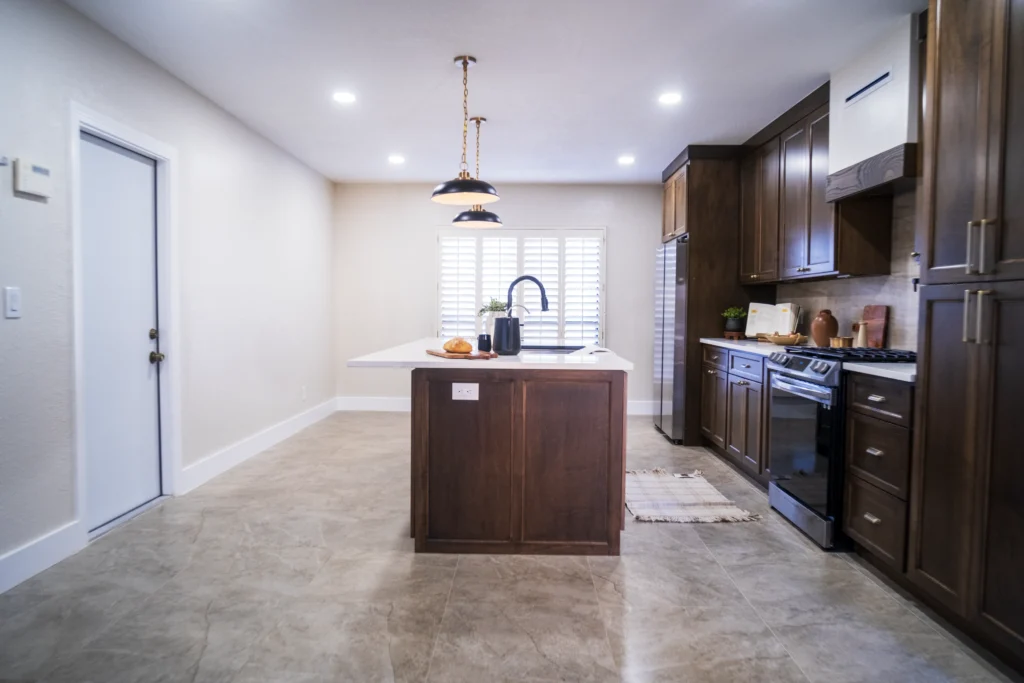
Tile
Why tile cracks here
How to read the crack pattern and the membrane that stops it coming back.
Read the guide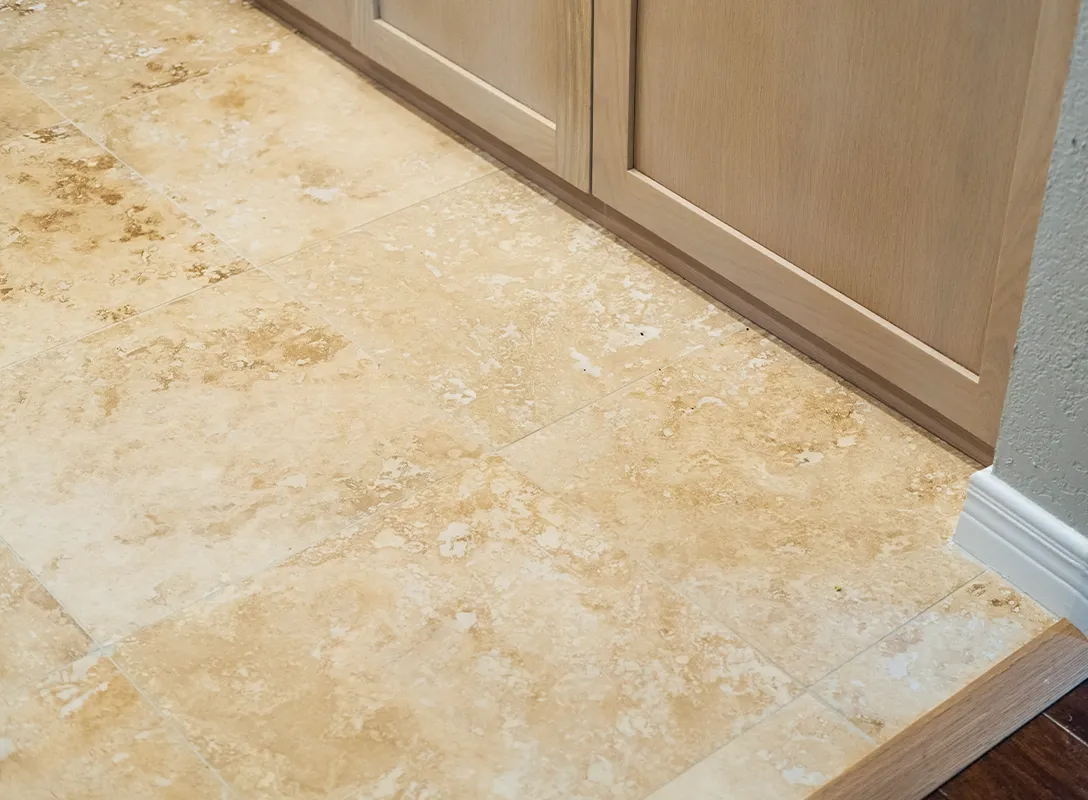
Ceramic, porcelain, large-format tile, travertine and marble, installed with the slab prep and crack isolation that El Paso's caliche soil actually requires.
Hablamos Español
Tile installation in El Paso lives or dies on one thing: the concrete slab underneath moves with the caliche soil, and a rigid assembly of thinset, tile and grout has nowhere to absorb that movement. The fix is a crack-isolation membrane over a slab that was assessed and prepped first, not more expensive tile.
It costs a little more on day one, and it is the difference between a floor that lasts and a floor you replace.
Walk into an El Paso home with a five-year-old tile floor and you can usually predict where the cracks are: one long line running across a room, or a grid of hairlines all pointing the same direction. That is not bad tile. That is the slab underneath moving, and the tile having nowhere to go.
El Paso homes sit on concrete slabs poured over caliche. Caliche expands and contracts with moisture more than most soil types, and every bit of that movement transfers up into the slab. Tile is rigid. Thinset is rigid. Grout is rigid. When the slab flexes and nothing in the assembly is designed to absorb it, the tile is what gives.
None of this is a proprietary trick. Crack isolation is standard assembly design, published by the Tile Council of North America in the handbook installers work from, and you can look up the soil under your own address through the USDA Web Soil Survey.
An uncoupling or anti-fracture membrane between the slab and the tile, so slab movement stops at the membrane instead of travelling into your floor.
We look at existing cracks, flatness and elevation changes before quoting, because that is what decides how much prep the job actually needs.
Soft joints at the perimeter and across long runs. Skipping them is one of the most common reasons grout cracks in a house that is otherwise fine.
The most durable option for El Paso homes. Low absorption, holds up to grit and dry heat, and works from the entry to the shower pan.
A lower cost per square foot for spaces that see less traffic, like a guest bath or a bedroom.
12x24 and up. Fewer grout lines and a cleaner look, but it demands a flatter substrate, so the slab prep matters more, not less.
A natural fit for the desert palette. Needs sealing and a crew that knows how to fill and hone it.
The premium finish. Softer than porcelain, so it goes where it will be admired more than abused.
We measure, look at the slab, check for existing cracks and elevation changes, and talk through what the space gets used for.
Material, labor, prep, demo and haul-away broken out separately. You see exactly what each part costs.
Old flooring out, subfloor cleaned and leveled, crack-isolation membrane where the slab needs it. Carpet removal included at no extra charge.
We dry-lay the pattern and set the starting line so cuts land where they look intentional, not where they happen to fall.
Tile set, grout applied and cleaned, and natural stone sealed before we leave.
Entryways and hallways, because they take the brunt of the dust and grit that comes in off the street. Kitchens, where spills are constant. Bathrooms and showers, where nothing else performs as well long-term.
And open living areas in homes without much shade, because tile stays cooler than any other hard surface in an El Paso July.
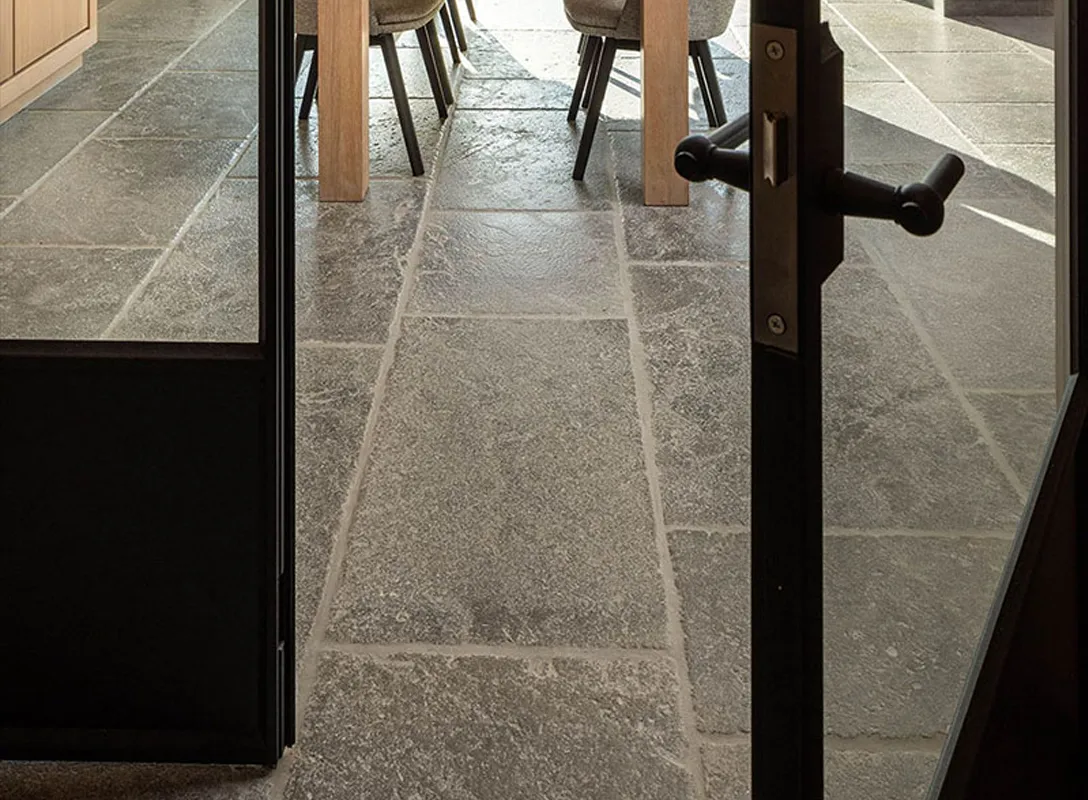
Tile installation in El Paso typically lands between $8 and $20 per square foot installed, material and labor together. Ceramic in a straightforward layout sits at the low end. Large-format porcelain, travertine and marble sit at the top, and so does any job that needs significant slab leveling or a complicated pattern.
That is a typical market range, not a quote. What your floor actually costs depends on square footage, the tile you pick, the shape of the rooms, and what we find when we look at the slab. The free in-home measurement is how you get a real number, and it comes to you in writing.
| Material | Typical installed range | What moves the price |
|---|---|---|
| Ceramic tile | Low end of the range | Simple straight-set layout, minimal slab prep |
| Porcelain tile | Middle of the range | Tile size, pattern, amount of cutting |
| Large-format porcelain | Upper middle | Slab flatness, leveling required |
| Travertine | Upper end | Filling, honing and sealing labor |
| Marble | Top of the range | Material cost, handling, sealing |
Ranges reflect typical El Paso market pricing for installed tile, not a quote from El Paso Flooring Pros. Your written estimate is the only number that applies to your house.
Both options include the free measurement, the written itemized quote, old flooring removal and subfloor prep.
Tell us the room and the look you want and we quote one all-in installed price using material at contractor pricing. No trips to a store, no guessing on quantities or waste factor.
Already picked out tile at a store or ordered it online? We install any major brand you buy, and you pay for labor only.
One year on our workmanship, plus whatever the manufacturer warranty covers on the material itself. If something we installed fails within that year because of how it was installed, we come back and fix it.
Free in-home measurement. Written itemized quote before any tools come out. Removal and haul-away of your old flooring, including carpet, at no extra charge.
Porcelain absorbs less water and is harder, so it holds up better in entries, kitchens and anywhere wet. Ceramic costs less and is a reasonable choice for a guest bath or a bedroom. In a house that gets real traffic, porcelain is worth the difference.
Sometimes. It depends on whether the existing tile is sound, whether the added height causes problems at doors and transitions, and whether the slab underneath is stable. We tell you honestly at the measurement, because tiling over a floor that is already failing just buries the problem.
Usually for the same reason the tile cracks: slab movement with no isolation layer. Sometimes it is a missing expansion joint where the floor meets a wall or runs more than about twenty-five feet. Both are prep issues, not grout issues.
Yes. Tile and stone conduct heat away from your feet, which is why they feel cool. In a house where the afternoon sun hits hard, that is a real comfort difference, not a marketing line.
Most single rooms are one to three days including demo and prep. Whole-home tile takes longer, and natural stone takes longer than porcelain because of sealing. You get a specific timeline in the written quote, not a vague range.
Yes, and we haul it away, at no extra charge with any hard-surface installation. We remove carpet but we do not install it. More about carpet removal.
From our guides
Tile
How to read the crack pattern and the membrane that stops it coming back.
Read the guide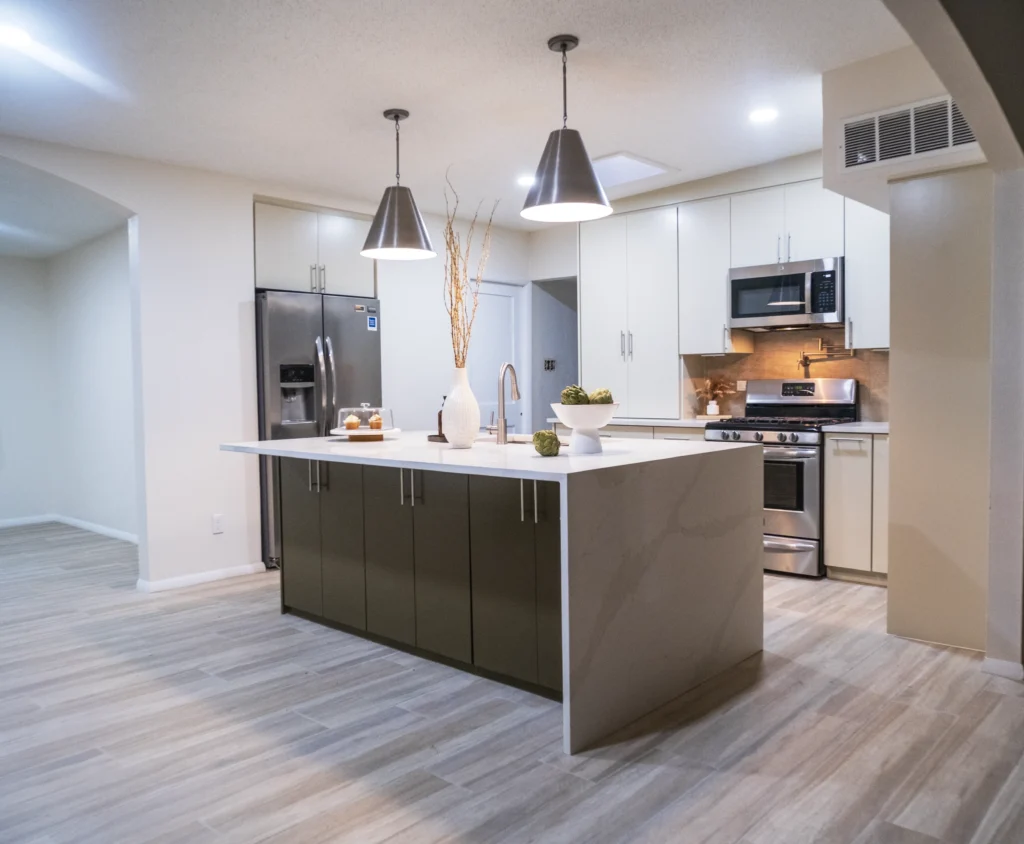
Comparison
Seven honest trade-offs between the two floors most El Paso homes come down to.
Read the guide
Cost
Real 2026 prices per square foot by material, plus the slab-prep line items that move a quote by thousands.
Read the guideFree in-home measurement, written itemized quote, no pressure. Most estimates are scheduled within 48 hours.